 18+
18+
18+
18+
Discover proven betting systems, smart bankroll tips, and expert tricks to play Tower Rush with confidence and control.
Free demo — no real money. Mirrors the real game's behaviour. May be unavailable in some regions.
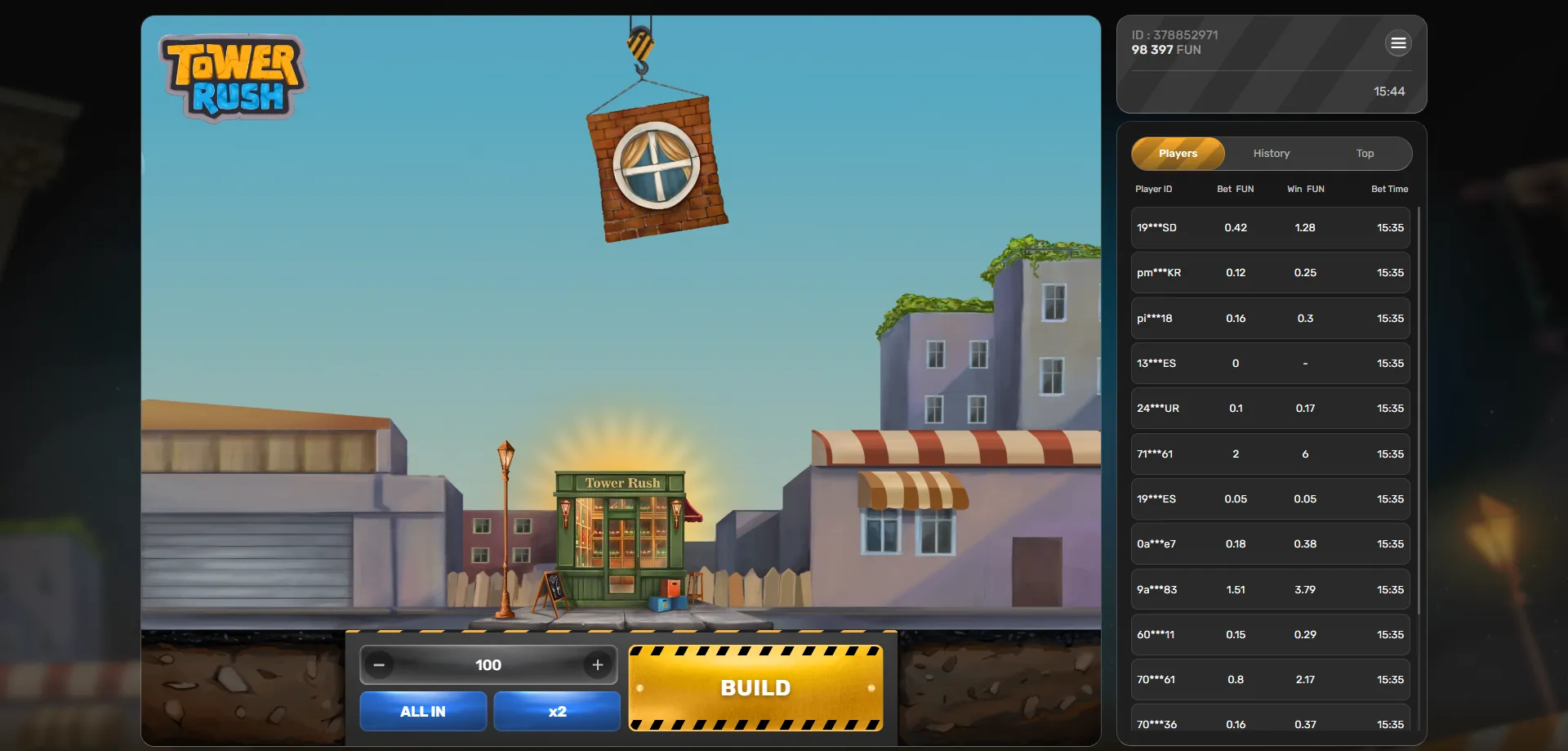
Tower Rush blends rapid decision-making with genuine strategic depth — understanding its mechanics is the first step toward playing smarter. Before diving into structured betting systems, every player should absorb a handful of foundational principles that apply regardless of session length or bankroll size.
The game, developed by Galaxsys and released in 2024, runs on a certified Random Number Generator (RNG), which means no two rounds are predetermined or connected. Each floor drop is independent, and no pattern from a previous round guarantees anything about the next. Keeping this in mind prevents the common trap of "hot streak" thinking.
The game's high RTP of 98.50% is one of its strongest advantages — this figure is significantly above the typical 96% standard for online slots and crash games, meaning the house edge is comparatively slim. That edge still exists, however, so disciplined play remains essential.
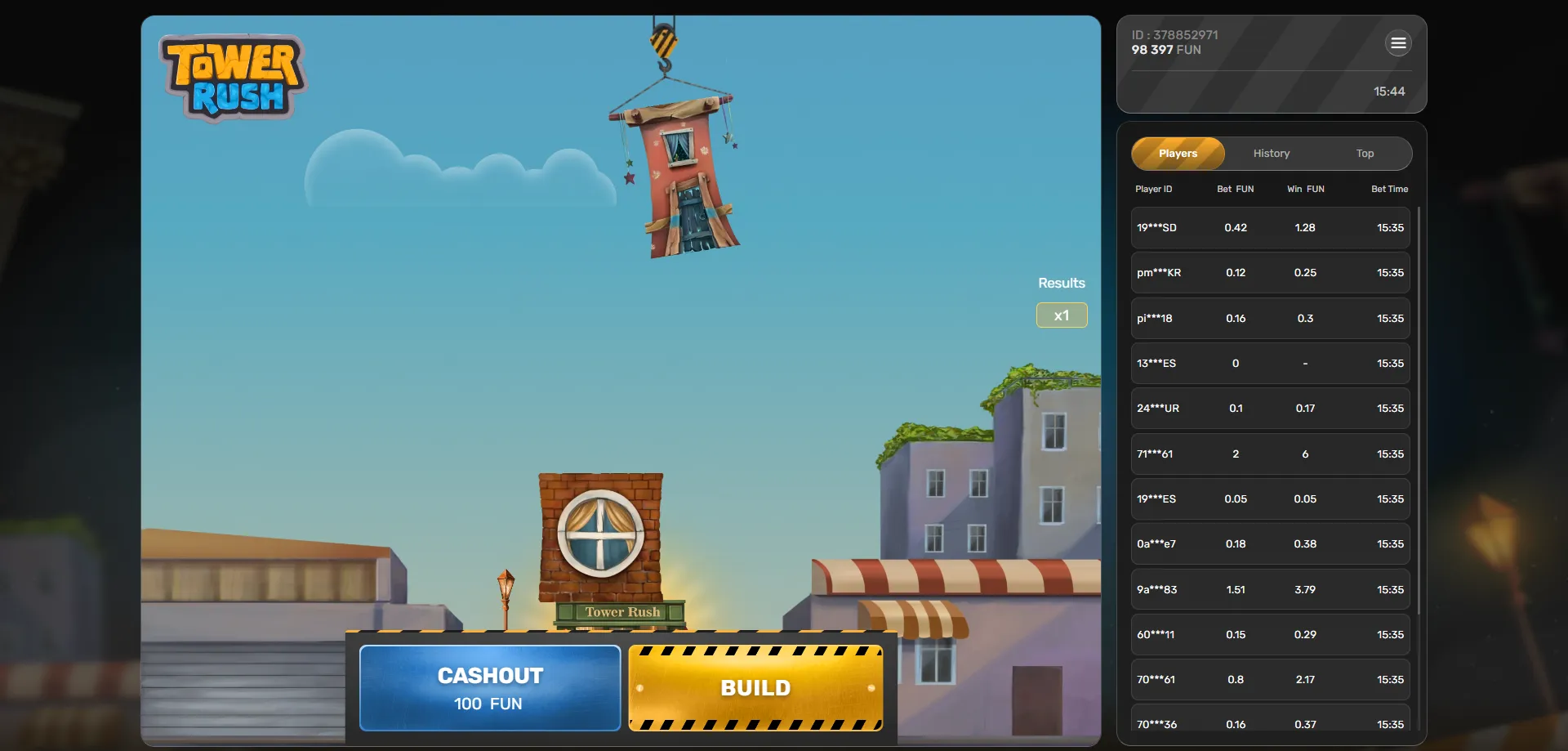
Structured approaches to betting help you make consistent decisions instead of emotional ones. The following four methods represent the most practical tower rush strategy options available, covering a range of risk tolerances from cautious to aggressive.
The simplest and most disciplined approach is to select a stake you are comfortable with — say MYR 5 — and keep it identical across every round regardless of outcomes. You never increase after a loss and never inflate after a win. The sole variable becomes your cashout timing. This strategy suits players who want to extend session time and experience the game's bonus floors without exposing themselves to escalating losses. It also makes bankroll tracking straightforward: if you deposit MYR 200 and bet MYR 5 per round, you have 40 rounds of runway before exhausting your stake.
A refinement of the fixed-bet method, the low-size approach intentionally keeps bets at the smaller end of what the platform allows — often at or near the MYR 0.05 minimum. The logic is simple: small bets protect your bankroll during the inevitable streaks of early crashes, while the high RTP of 98.50% means that over enough rounds, your return rate remains favourable. This is arguably the most beginner-friendly tower rush strategy because it removes the pressure of significant individual losses and allows you to learn cashout timing at very low cost.
One of the most common and costly mistakes in Tower Rush is holding out for a large multiplier after the tower has already climbed several floors. The instinct to "let it ride" feels logical in the moment — the tower is high, the multiplier is growing — but every additional floor carries the same independent collapse risk. A tower at 5x is no more stable than one at 1.5x. Experienced players who apply practical tower rush tips and tricks cash out at pre-decided targets (such as 2x or 3x) and resist the urge to push further, especially during losing runs. Chasing high odds is the single fastest way to drain a bankroll in this game.
Some players do deliberately target high multipliers — 10x, 20x, or beyond — as a high-risk, high-reward style. If you choose this path, it must be paired with a strict bet-size reduction to compensate. For example, if your standard bet is MYR 20, an aggressive round targeting 15x or more should be placed at MYR 2–5. The rationale: big multipliers hit rarely, so reducing your stake on those attempts limits the damage during the many rounds they do not land. Never use your full session stake on high-coefficient attempts — treat them as a small, ring-fenced portion of your overall budget.
Beyond the game-specific approaches above, several classical betting systems translate effectively to crash-style games like Tower Rush. Each manages stake sizing across a sequence of rounds in a different way. None guarantees profit — all gambling outcomes remain uncertain — but they do provide a structured framework that prevents chaotic, emotion-driven betting.
Martingale is the most widely known progressive system. The rule is straightforward: after every losing round, double your stake. After a winning round, return to your base bet. The theory is that a single win will always recover all previous losses plus return a profit equal to the base stake. In Tower Rush, applying Martingale at a low base bet — MYR 1, for instance — means the sequence runs: MYR 1, MYR 2, MYR 4, MYR 8, MYR 16 after four consecutive losses. The risk is a long losing streak that pushes stakes beyond your comfort zone or the platform's maximum. Use Martingale only with a base bet that leaves meaningful room for doubling before hitting your session limit.
The Fibonacci system uses the famous mathematical sequence — 1, 1, 2, 3, 5, 8, 13, 21 — to determine bet sizes. After each loss, you move one step forward in the sequence. After a win, you move two steps back. Compared to Martingale, Fibonacci escalates more slowly, making it a gentler progressive option. Applied to Tower Rush with a MYR 1 unit, your bets would progress as: MYR 1, MYR 1, MYR 2, MYR 3, MYR 5, MYR 8 across six consecutive losses. This slower escalation gives your bankroll more breathing room, which is why many players prefer Fibonacci as a tower rush strategy when they want progression without Martingale's sharp doubling curve.
D'Alembert is a flat-progression system that increases your bet by one unit after a loss and decreases it by one unit after a win. It is the most conservative of the progressive methods and the least likely to produce sudden large stake jumps. For Tower Rush, this translates to very manageable swings: starting at MYR 5, a loss takes you to MYR 6, a further loss to MYR 7, but a single win brings you back to MYR 6. The system works best when wins and losses alternate roughly evenly — if you hit a prolonged losing run, the incremental increases still accumulate. D'Alembert suits players who want a systematic structure without aggressive risk, and it pairs naturally with the low-to-medium cashout targets recommended in the tower rush tips and tricks framework above.
Labouchere, sometimes called the cancellation system, is more complex but offers a high degree of customisation. You begin by writing down a sequence of numbers that sum to your target profit — for example, 1-2-3-2-1 targeting MYR 9. Each bet is the sum of the first and last numbers in your sequence (here, MYR 2). A win cancels both numbers; a loss adds the bet amount to the end of the list. You continue until all numbers are cancelled (target reached) or your session limit is hit. Labouchere rewards disciplined record-keeping and suits experienced players looking for a structured tower rush lifehack to set clear session profit goals. It requires more attention than the other three systems but gives you the tightest control over targets.
Understanding the underlying technology helps set realistic expectations about what strategy can and cannot achieve. Tower Rush operates on a certified Random Number Generator (RNG), meaning every floor drop outcome is determined independently and randomly at the moment it occurs. There is no server-side schedule of when crashes will happen, no pattern to decode, and no external tool that can predict an upcoming result.
The game also uses cryptographic provably fair technology, which allows players to independently verify the fairness of each individual round after it has concluded. This transparency is a meaningful trust signal: neither the casino nor Galaxsys can manipulate outcomes once a round has begun. Any tower rush lifehack that claims to "predict" or "hack" results based on previous rounds is misleading — the RNG resets fully with each new drop.
What the algorithm does allow you to influence is your own decision-making: specifically, when you press Cash Out. That choice — timed before a crash occurs — is the single controllable variable in the entire game. Every credible strategy in this guide is essentially a framework for making that decision consistently and rationally rather than impulsively.
The medium volatility profile means crashes can come early and also late; neither extreme is unusual. The 98.50% RTP means that over a very large number of rounds, the theoretical return is close to your total stake — but session variance can be significant in either direction.
The honest answer is: yes, with realistic expectations. Structured strategies genuinely improve the consistency of your decision-making and help you avoid the two biggest behavioural pitfalls — chasing losses and holding out for unrealistic multipliers. They will not turn a losing game into a guaranteed winning one, but they do give every session a framework and protect your bankroll from chaotic swings.
The high RTP of 98.50% is your strongest natural ally. Combined with a sensible flat or mild progressive betting approach and pre-set cashout targets, you create conditions where the game's statistical return rate can work in your favour over time. Players who apply disciplined tower rush strategy consistently — especially the fixed-bet or D'Alembert systems at modest cashout targets — report more stable and enjoyable sessions than those who bet intuitively.
Use the free demo to test any system before committing real money. Adjust cashout targets based on your own risk comfort. And treat special floors like Frozen Floor as strategic opportunities: locking in a win midway through a round removes a portion of risk entirely, which is a form of in-game strategy that complements any staking system you choose.
If you want to explore the game's full mechanics before building your approach, the detailed rules and gameplay walkthrough are available at /how-to-play — a recommended starting point for anyone new to Tower Rush or looking to refine their understanding of how each floor type affects the multiplier sequence.
Sign up today to receive an exclusive 200% match bonus on your first deposit. Don't miss your chance to conquer the tower with extra spins!
🚀 Play Tower Rush🔒 18+ · T&C Apply · Play Responsibly